


News & Updates
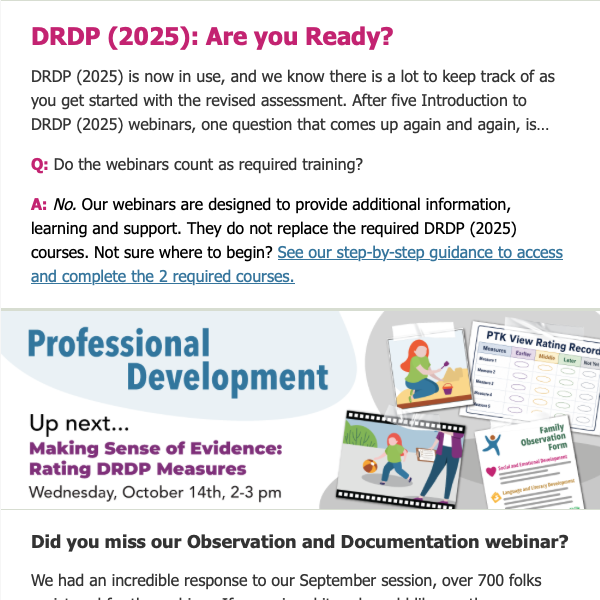
October 2026 Connect: DRDP (2025): Are you ready?
Clarifies DRDP (2025) required training, highlights upcoming professional development, and shares how webinars can support continued learning and practice.
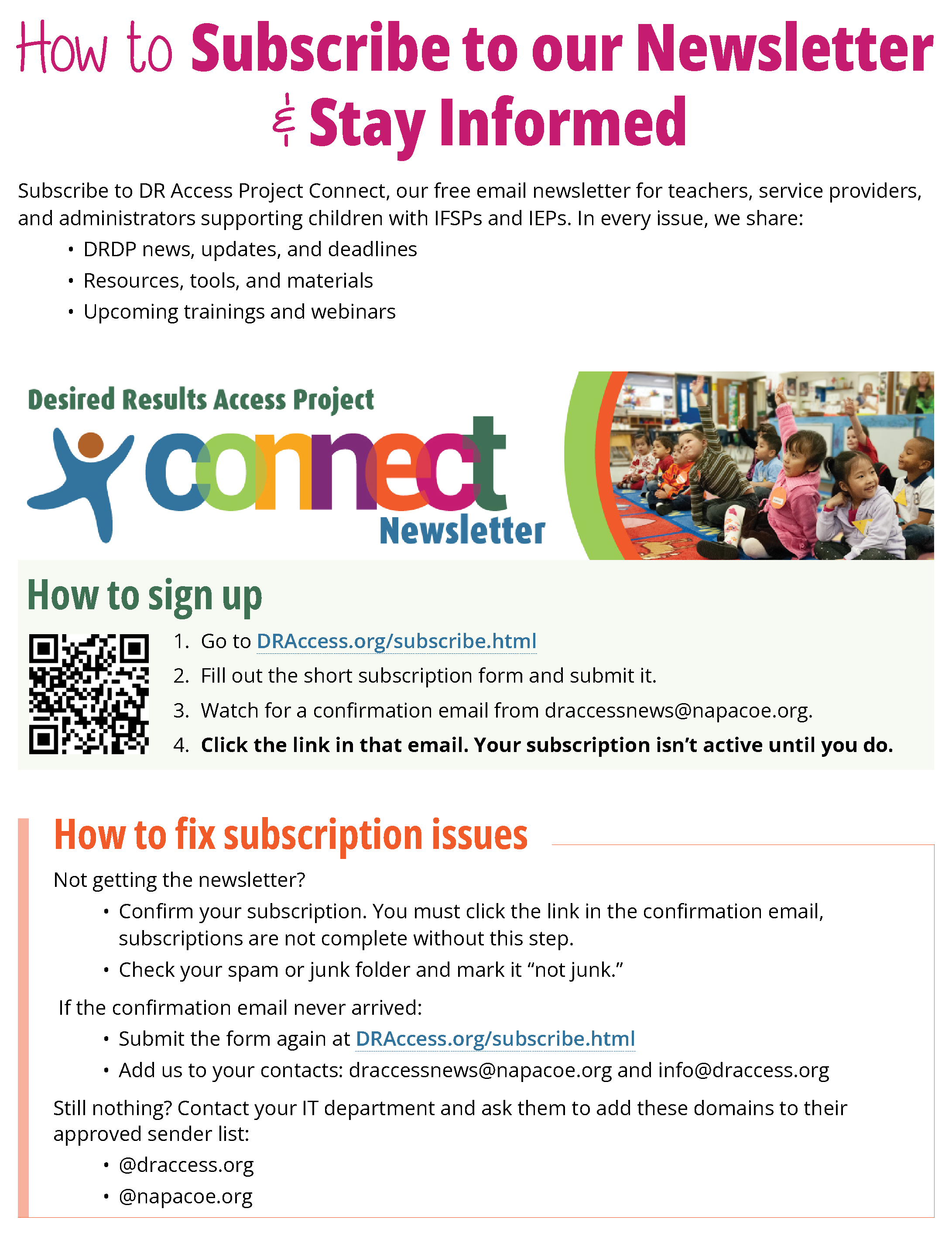
How to Subscribe to our Newsletter & Stay Informed
Subscribe to our free email newsletter for DRDP news and updates, resources, and upcoming trainings and webinars. This guide walks you through how to subscribe and what to do if you aren’t receiving the newsletter.
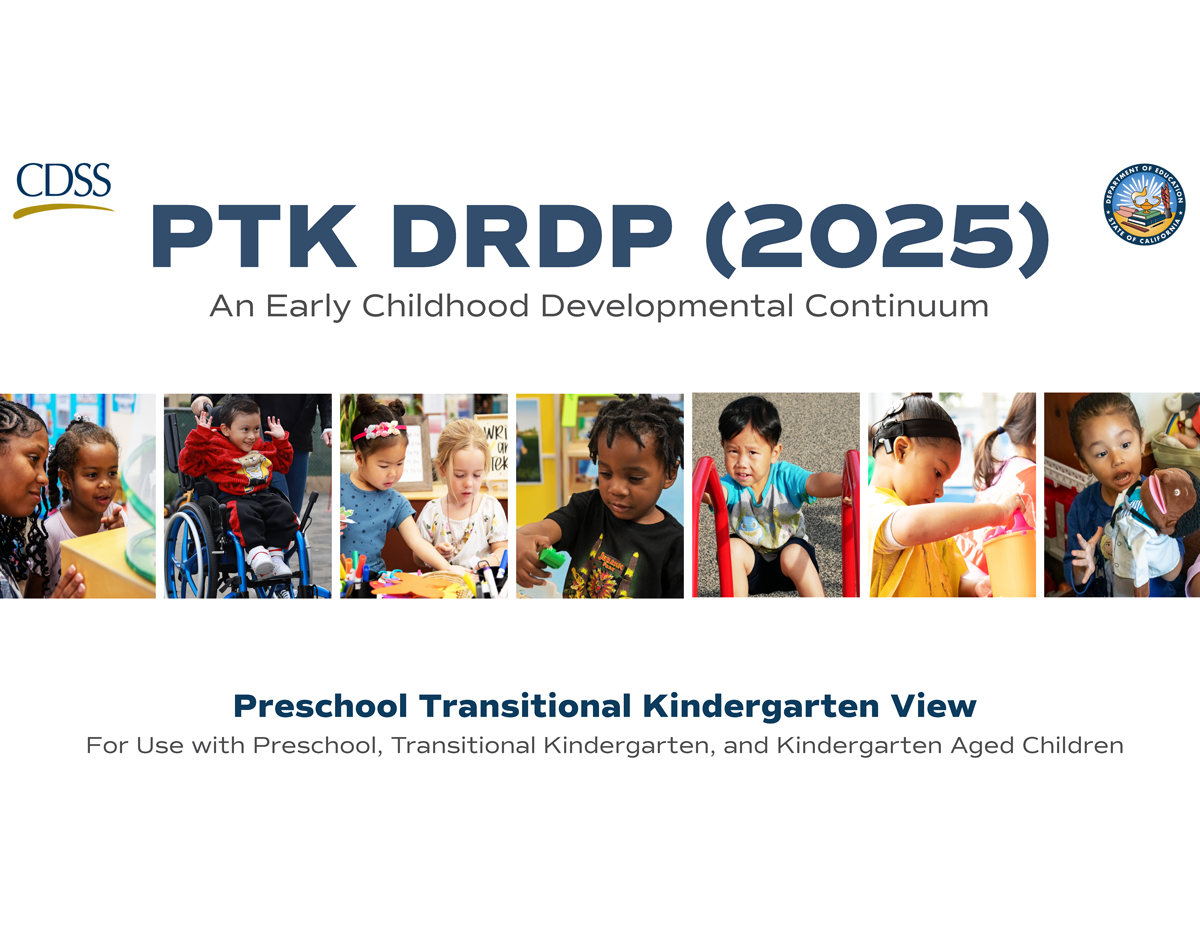
DRDP (2025) Preschool – Transitional Kindergarten – Kindergarten (PTK) View Manual
Full PTK DRDP (2025) Assessment Manual for use with 3, 4, and 5-year old children with IEPs.
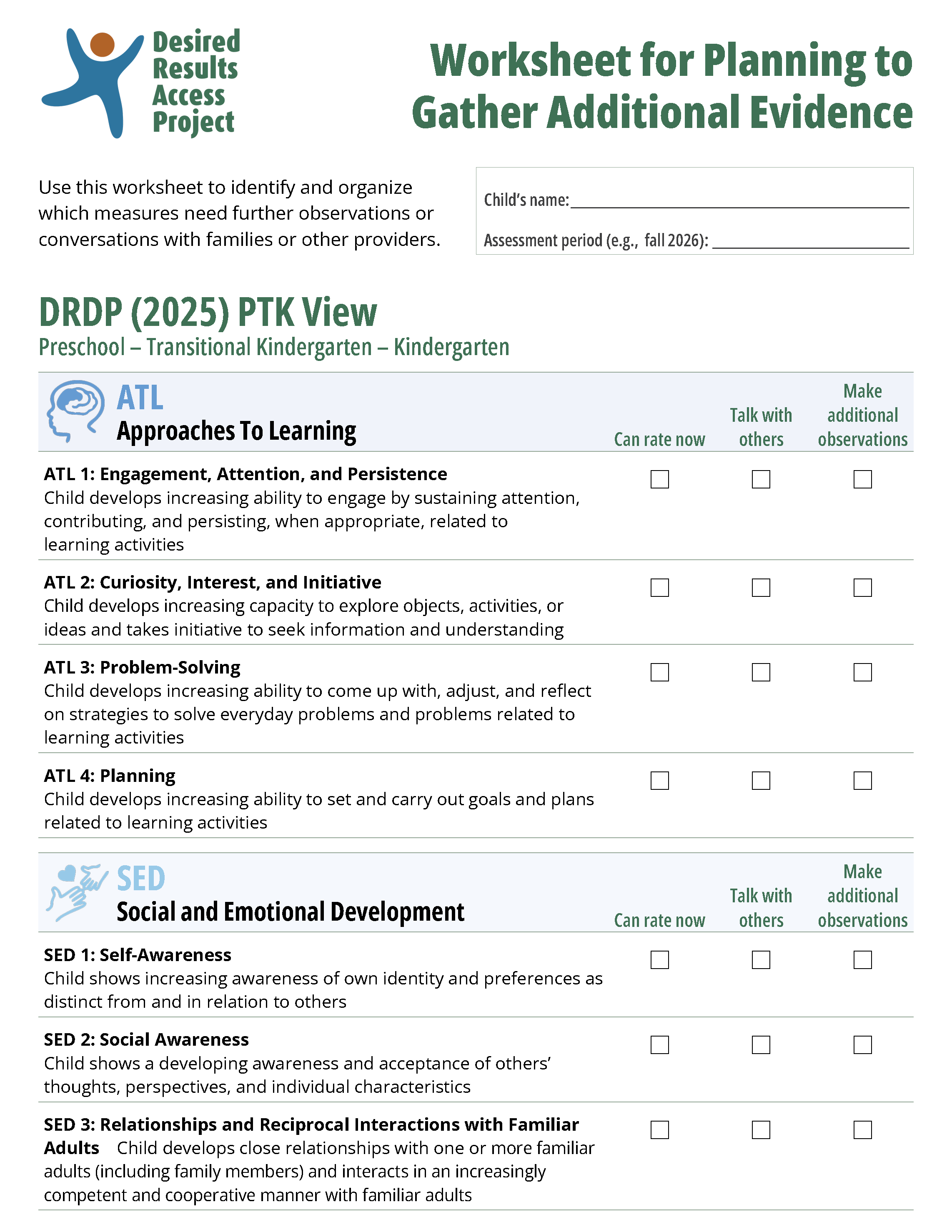
Worksheet for Planning to Gather Additional Evidence – Preschool – Transitional Kindergarten – Kindergarten View
A planning tool to help assessors identify which DRDP (2025) PTK measures need additional observations or conversations with families or other providers.
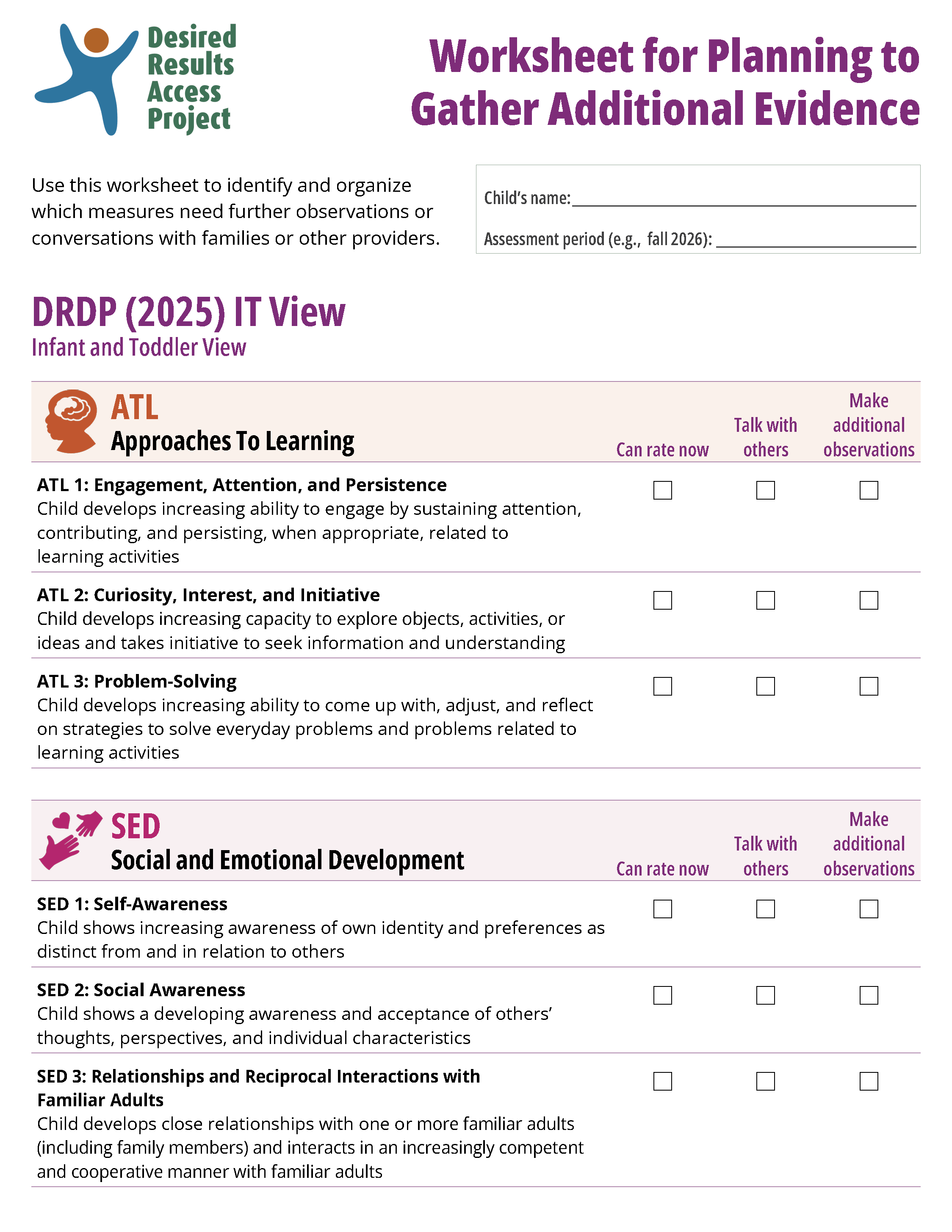
Worksheet for Planning to Gather Additional Evidence – Infant and Toddler View
A planning tool to help assessors identify which DRDP (2025) IT measures need additional observations or conversations with families or other providers.
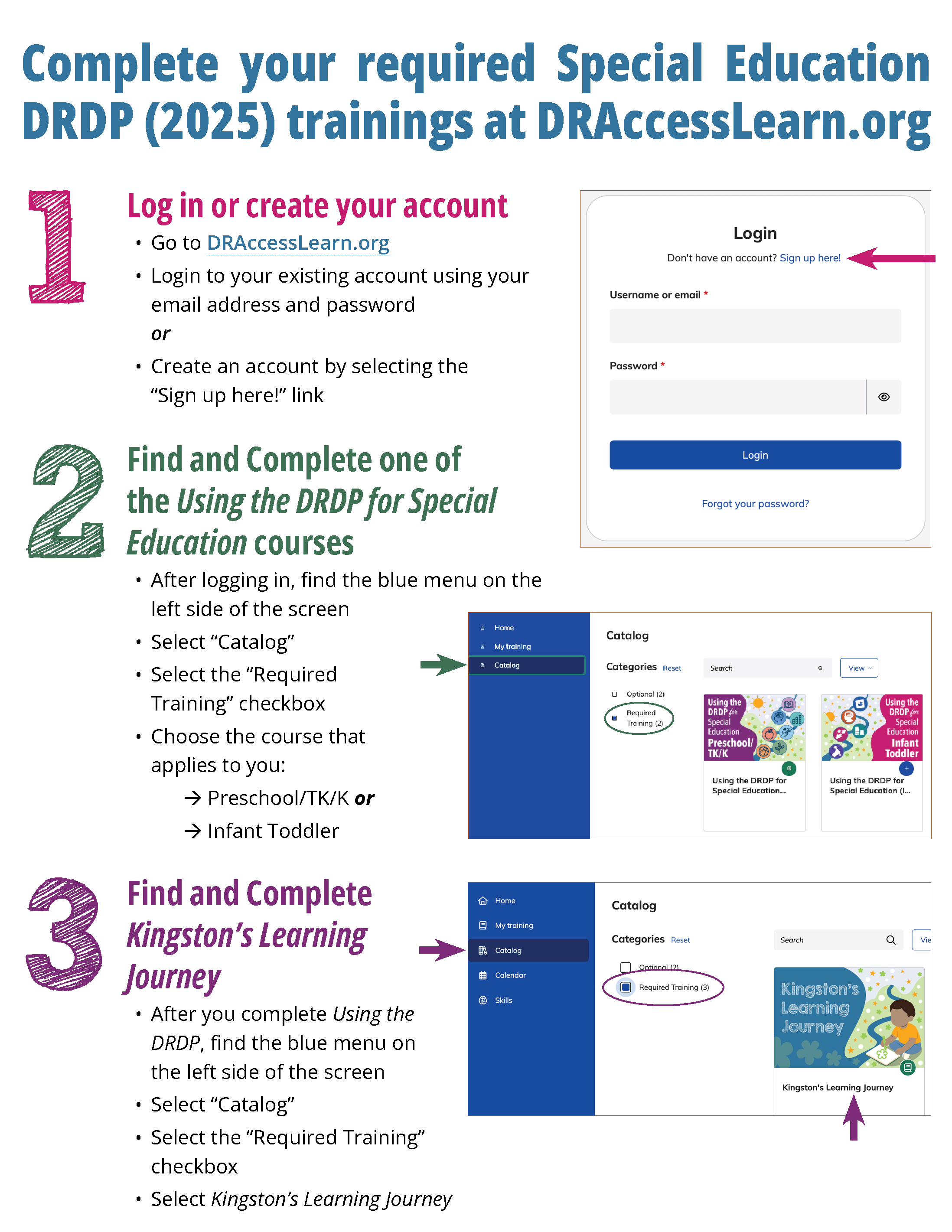
Complete your required Special Education DRDP (2025) trainings at DRAccessLearn.org
Step-by-step instructions for accessing and completing the required DRDP (2025) special education training courses in DR Access Learn. How to login, select an age-specific course, and complete Kingston’s Learning Journey.
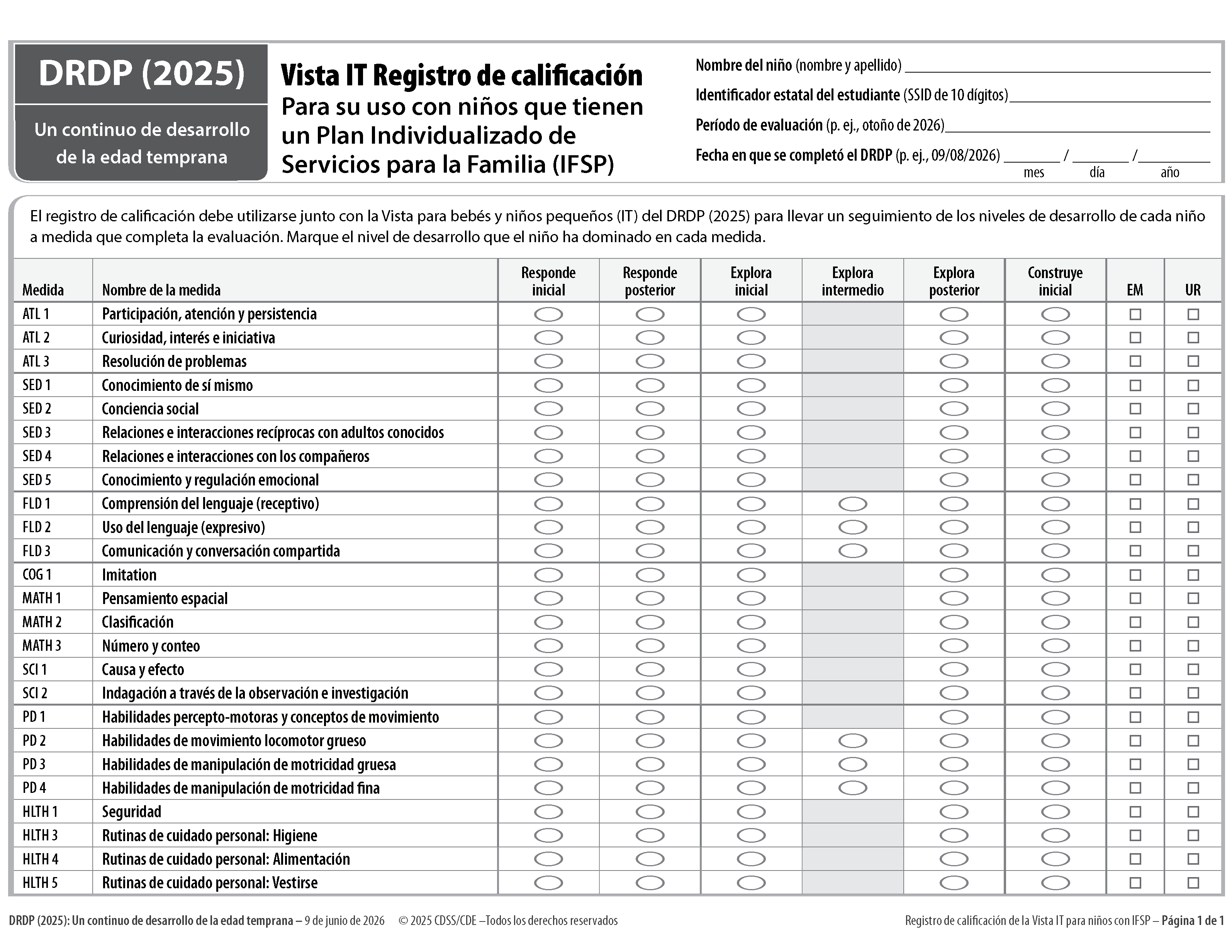
DRDP (2025) SED: Página de información y Registro de calificaciones de la Vista IT
Se requiere una Página de información y un Registro de calificaciones para cada niño evaluado a fin de informar los resultados del DRDP. Use esta versión para bebés y niños pequeños.
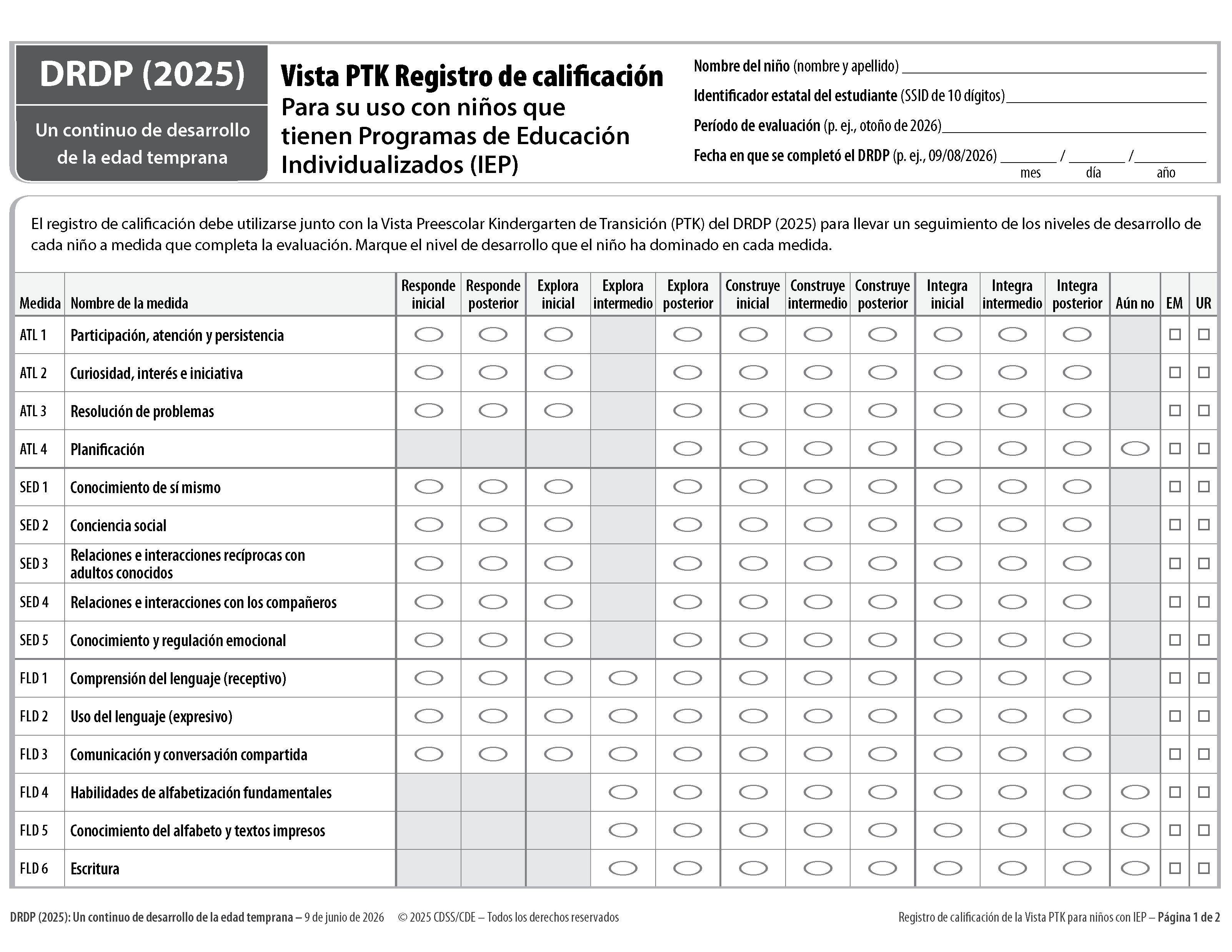
DRDP (2025) SED: Página de información y Registro de calificaciones de la Vista PTK
Se requiere una Página de información y un Registro de calificaciones para cada niño evaluado a fin de informar los resultados del DRDP. Use esta versión para niños de 3, 4 y 5 años con IEP.